Five Numbers Your Seven Iron Knows Before Your Handicap Does

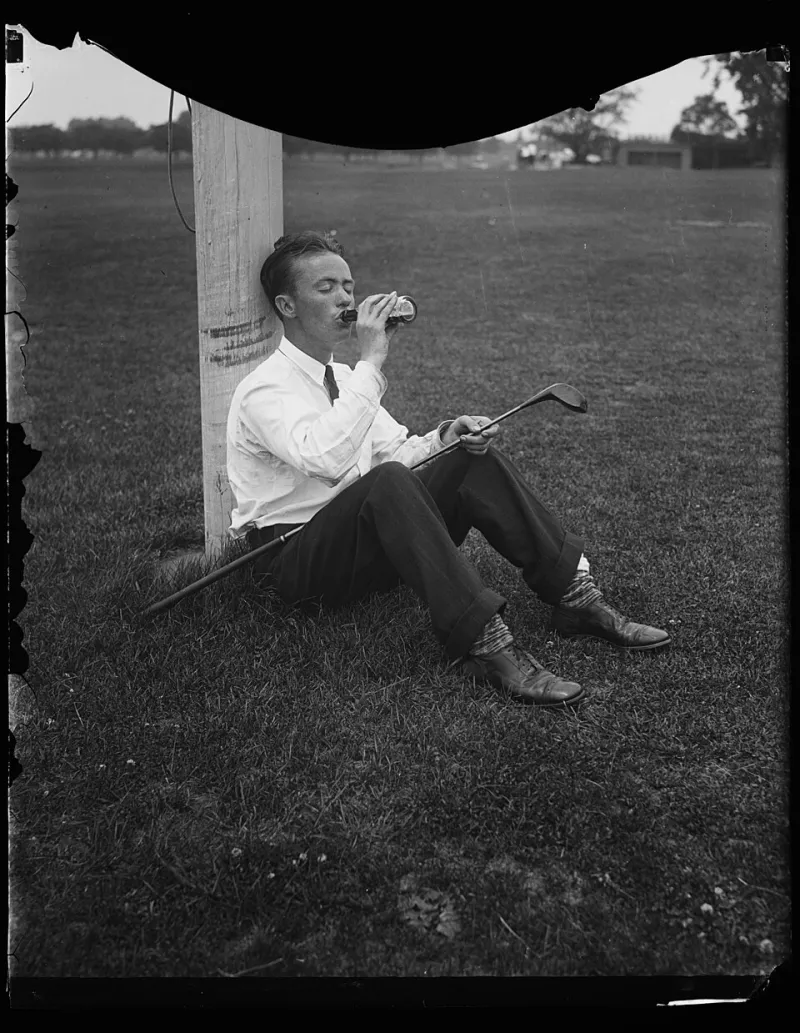
Photo: Dietmar Rabich, CC BY-SA 4.0, via Wikimedia Commons
Your handicap is a useful scoreboard, but it is a terrible coach. It arrives late, it mixes up your good days with your bad ones, and it rarely tells you which part of your game needs the work. A seven iron, by contrast, is honest on the spot. Give it twenty balls on a range mat and it will reveal more about your strike, your dispersion and your distance control than a month of medal results.
With the 2026 season sliding towards winter, this is the ideal moment for a simple check-up. Not a swing overhaul. Not a new set of clubs. Just five numbers you can collect in one range session and a handful of holes, then use to decide what actually deserves your practice time.
Why Your Handicap Is a Lagging Indicator
Handicaps are built from scores, and scores are built from everything: putting, chipping, the odd lost ball, the day the wind blew your hat into a hedge. By the time a handicap moves, the evidence is already old. A seven iron gives you a cleaner signal. It is the club most club golfers use for stock yardages, par-3 tee shots, punchy recoveries and calm little lay-ups. If your seven iron is behaving, your game usually follows.
The aim here is not to chase perfect numbers. It is to find the one number that is furthest from where you want it, then work on that rather than everything at once.
Number One: The Carry Gap
Hit ten balls with your normal seven iron and record the carry distance of each one — launch monitor if you have access, range markers if you do not. Ignore the one you thin and the one you flush. Look at the gap between your best carry and your average carry.
A tight carry gap — say five to seven yards between your stock shot and your typical effort — suggests your strike is repeatable. A gap of twelve yards or more means you are meeting the ball differently from swing to swing. That is not necessarily a swing fault. It could be ball position drifting, tempo getting quick, or you simply hitting too many balls without a target.
UK range balls can be a mixed bag, so treat absolute distances with suspicion. The gap matters more than the number on the screen.
Number Two: Left-Right Spread
Now look at where those ten balls finished, not how far they went. Estimate the width of the group. If your seven iron spread is wider than about twenty yards left to right, your stock shot is not really a stock shot. It is a guess.
On a parkland course with tree-lined fairways, that spread costs you angles into greens. On a links course with a crosswind, it costs you even more. The fix is rarely a new swing thought. Often it is a shorter, smoother swing with a clearer target, or simply accepting a natural curve rather than fighting it.
A good check is to pick a specific target — a flag, a marker, a distant bin — and score each ball as hit, left or right. Ten balls gives you a percentage. If only four finish on your intended side, your dispersion needs attention.
Number Three: Thin-Toe Rate
This is the number most club golfers ignore, and it is often the most revealing. Use impact tape or foot spray on the face. Hit twenty seven irons. Count how many strike marks sit low on the toe.
A thin-toe miss usually means the club is arriving slightly high and slightly out, or your ball position has crept forward. It is the classic winter miss: cold muscles, tight hips, a rushed first few swings. If more than a quarter of your strikes are low-toe, do not panic. Check your ball position, make sure your posture is not collapsing, and slow down. If the rate stays high over two sessions, it is worth a lesson — but it is not worth rebuilding your swing in November.
Number Four: Trajectory Window
You do not need a launch monitor for this one. Pick a window in the distance — between two trees, under a floodlight, over a marker — and see whether your seven iron consistently flights through it. A useful target for most club golfers is an apex around twenty-five to thirty yards, with a finish that holds its line rather than ballooning or diving.
If your ball flight is much lower than that, you may be delofting the club or sliding through impact. If it is much higher, you may be adding loft at the last moment or playing the ball too far forward. In the UK, a seven iron that can hold its window into a breeze is worth more than one that carries ten yards further on a still day.
Number Five: Par-3 Conversion
Take this one to the course. Over your next three rounds, count every par-3 where you hit seven iron from the tee. How many found the green? How many finished pin-high? How many were short?
Most club golfers are surprised by how often they are short with a seven iron from the tee. The culprit is usually adrenaline, a rushed tempo, or choosing a club based on the one perfect strike from the range. A par-3 conversion rate around forty per cent is a reasonable target for a weekend player. Below that, your club selection and commitment need work, not your swing.
How to Run the Check Without Turning It Into a Project
Do the range numbers in one session. Do not change your swing halfway through. Do not buy anything. Write the five numbers down — carry gap, left-right spread, thin-toe percentage, trajectory window pass rate and par-3 greens hit — and leave it at that.
Then play three normal rounds. No swing thoughts. No extra practice. Just observe. The numbers will tell you which one is the outlier.
What the Numbers Actually Change
If your carry gap is the problem, practise tempo and centred strike. If your left-right spread is the problem, practise target selection and a smoother swing. If your thin-toe rate is high, check ball position and posture. If your trajectory window is inconsistent, work on a controlled finish. If your par-3 conversion is poor, commit to one more club and trust it.
One priority. One practice theme. That is the whole point of the exercise. Your handicap will catch up eventually. Your seven iron already knows.