Driver in the Garage: What Seven Rounds Without It Did to My Golf

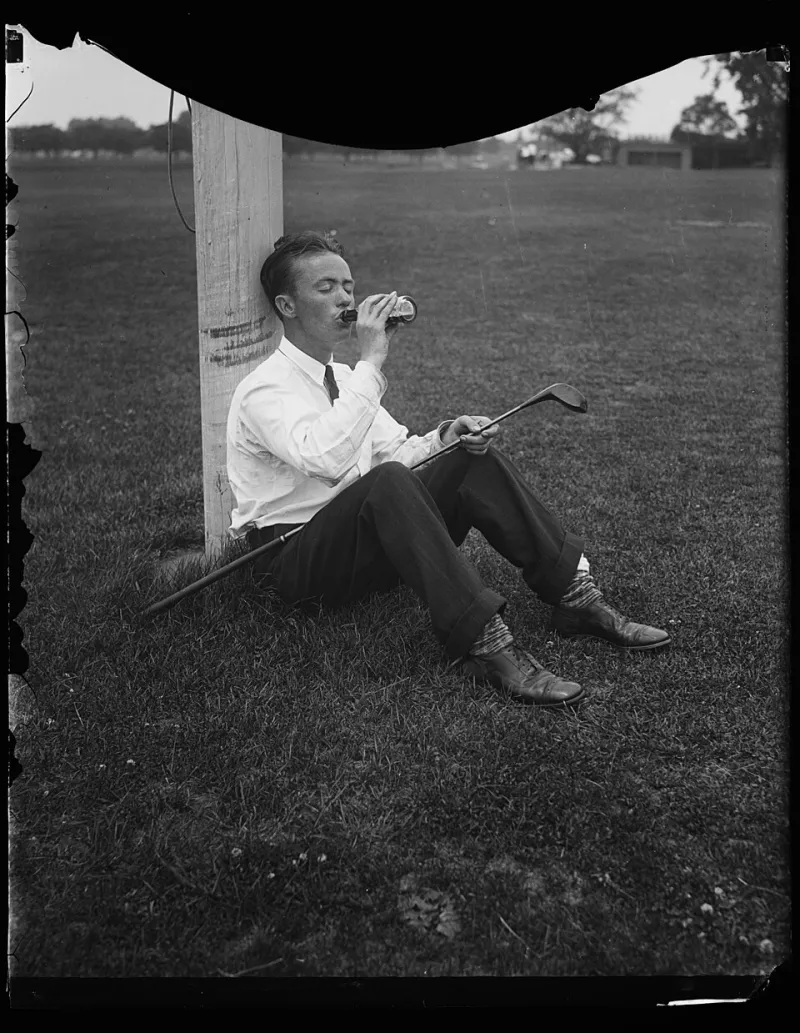
Photo: David Burn from Austin, TX, USA, CC BY-SA 2.0, via Wikimedia Commons
I have a confession. My driver and I have not been on speaking terms for about three years. It goes left, it goes right, and about once a round it goes somewhere that requires a provisional ball and an apology to the group behind.
So in late September I did something slightly unhinged. I took the driver out of the bag, put a seven iron in its place as the longest club I owned, and played seven full rounds that way. No hybrid off the tee, no three wood on a wide hole. Just the seven iron, a lot of tees, and a growing awareness of my own vanity.
Here is how it went.
The rules I set myself
Seven rounds, medal or Stableford, no gimmes, all at my home club in Hampshire plus two away days. Seven iron off every tee box where a driver would normally come out. If a hole needed more than about 150 yards off the tee to be playable, I moved up a set of tees - which felt like cheating for the first week and like common sense by the third. I kept every score, including the ugly ones.
For context: I play off 17.4, my average score before the experiment was 95, and my driver finds roughly six fairways a round on a good day.
Round one: the honeymoon
- And I loved every minute of it. There is something enormously freeing about standing on a tee knowing the ball is going to finish somewhere you can find it. I hit nine fairways, lost one ball, and made three pars in a row for the first time this year. The catch was obvious straight away - on our 400-yard par fours I was hitting seven iron, seven iron, wedge and walking off with a bogey at best. But a bogey with a tee shot in play feels very different to a double with a provisional.
Rounds two and three: the par fives get ugly
91 and 93. Our three par fives measure 505, 520 and 540 yards. With a seven iron off the tee they became genuine three-and-a-half shot holes, and my scoring average on them went from 6.1 to 7.4. I stopped thinking of them as par fives and started playing them as par sixes, which sounds like surrender and is actually just arithmetic.
Round three also exposed the flaw nobody mentions. Being short off the tee is fine. Being short and in the rough is not, and my seven iron dispersion, while far tighter than my driver's, is not a laser. On two holes I missed the fairway by three yards and could not reach the green with a five iron.
Round four: the penny drops
88, my best round of the year to that point. Nothing dramatic happened. I simply stopped trying to manufacture distance. Instead of a hard seven iron, I hit a smooth one. Instead of forcing a five iron into a long par four, I laid up to a number I like and tried to hole the pitch. My putting stats improved because I was finally hitting greens from the right side rather than scrambling from everywhere.
That is the real lesson of this experiment, and it has nothing to do with the club. It is about accepting what your game actually is on the day.
Round five: the wind game
90 at a linksy course on the Sussex coast, and the seven iron was genuinely brilliant. Keeping the ball low under the wind is far easier with a seven iron than a driver, and I hit eleven greens in regulation, which for me is fantasy land. Short knockers take note: in a 20mph wind, a well-struck seven iron is a weapon, not a compromise.
Round six: the day I nearly cracked
92, and it was grim. Cold, wet, into a headwind, on a course measuring 6,400 yards. I hit seven iron, seven iron, five iron, wedge on one hole and was still short. Around the 13th I started to resent the whole project and seriously considered walking to the car for the driver.
I did not, mainly because I had told everyone at the club what I was doing and pride is a powerful motivator.
Round seven: the numbers
89, and the experiment closed with a tidy summary of everything above. Across seven rounds: fairways hit went from roughly 6 in 14 to 10 in 14. Greens in regulation fell from 6 to 4. Balls lost dropped from about 12 across seven rounds previously to 5. Average score went from 95 to 89.9, and my handicap came down from 17.4 to 16.2.
What I would tell anyone trying it in 2026
- Move forward a tee. Playing a 6,400-yard course with a seven iron off the tee is a self-imposed punishment. Play the forward tees and enjoy it.
- Do not do it on the longest course you know. Pick somewhere under 6,000 yards for your first attempt or you will quit by the 12th.
- Rehearse the par fives mentally. Treat them as par sixes and your scorecard will stop bleeding.
- Keep the driver for wide holes. Total abstinence is not the point. This was an experiment, not a conversion.
- Watch your approach play, not just your tee shots. You will be hitting longer clubs into greens and that takes practice.
Would I do it again?
I have put the driver back in the bag, but it is on a short leash. It comes out on wide holes, into the wind and when I need to carry a corner. On tight par fours, on anything under 380 yards and in any kind of weather that makes the fairway a lottery, the seven iron gets the tee.
Seven rounds did not turn me into a short hitter's evangelist. What it did was prove something I had suspected for years: my driver was not costing me yards, it was costing me strokes. If you are a weekend golfer who has spent three seasons blaming your irons while your tee shots disappear into the trees, try it for a month. Your handicap might not tumble, but your enjoyment of a Sunday morning almost certainly will improve.