What the Next £150 Buys: Three 2026 Seven Irons, Three Budgets, One Honest Test
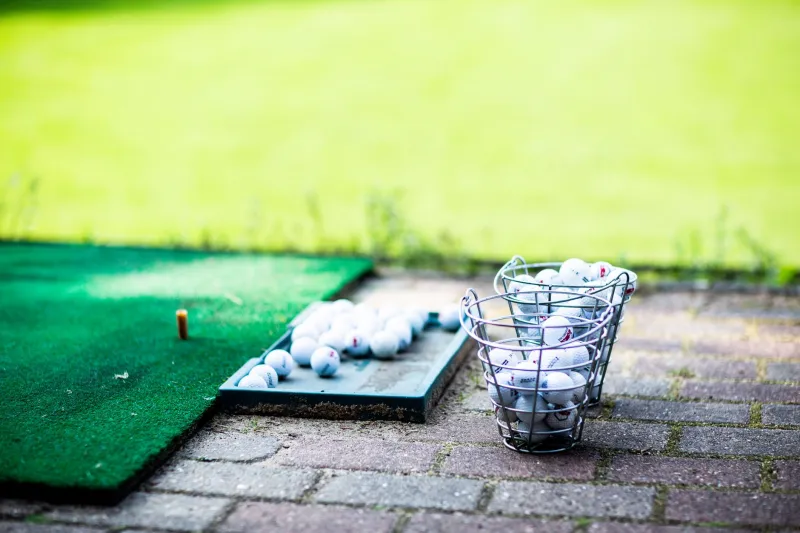
There is a moment in every pro shop when the conversation turns from loft and lie to the price tag. You are holding a seven iron that looks the part, feels lovely in the hand, and costs more than a decent weekend away. Then you glance at the one beside it, half the price, and wonder what exactly you are being asked to pay for. That is the question we set out to answer this autumn: what does the next £150 actually buy in a 2026 seven iron?
We took three irons at £150, £300 and £600 — all current 2026 models, all built for club golfers rather than tour players — and put them through the same test. Same range balls, same winter mat, same launch monitor, same tired swing. Crucially, we tested at weekend speed, not tour speed. No 95mph seven irons, no TrackMan heroics. Just a realistic 75–80mph clubhead speed, the sort you see at a municipal range on a Saturday morning.
How We Tested
Each iron was hit in regular flex, standard length and lie, with the same mid-range ball. We measured carry, total distance, dispersion and strike pattern, then took them onto a soft winter fairway for a nine-hole reality check. Feel was scored blind where possible. We also asked a local pro to assess the stock shaft, the face technology and the fitting options each price point unlocks. No launch monitor is perfect, and no test is universal, but the patterns were consistent enough to be useful.
The £150 Contender: Honest Hardware, Sharper Compromises
The cheapest iron in the test was not a bad club. It got the ball up, it felt reasonably stable on centred strikes, and it cost less than a decent pair of winter shoes. For a new golfer, or someone building a first full bag, that matters.
But the compromises showed up quickly. The stock shaft was lightweight and a little loose at speed, which made the club feel harder to control when we went after one. The face was lively enough, but off-centre strikes lost more distance than the pricier irons, and the dispersion pattern was noticeably wider. Feel was firm, almost clattery on thin strikes, and the finish looked more functional than fancy.
Fitting options at this price are usually limited to what is on the shelf. That is not a disaster — plenty of golfers play perfectly well with standard kit — but it does mean you are buying a club, not a fitting. Online, the £150 iron is tempting, but check the returns policy carefully. A seven iron that feels wrong in the hand is an expensive ornament.
The £300 Middle: Where the Smart Money Sits
The £300 iron was the eye-opener. This is the price point where 2026 technology starts to feel less like marketing and more like help. The stock shaft was better balanced, the face was more forgiving across the middle, and the ball flight was more consistent from swing to swing. We saw tighter dispersion, especially on toe strikes, and the feel was noticeably smoother without being soft to the point of vagueness.
This is also where fitting becomes realistic. Several UK retailers and pro shops will include a basic fitting with a purchase at this level, or at least let you try a couple of shaft options on a launch monitor. That matters more than any single technology story. A £300 iron with the right shaft will beat a £600 iron with the wrong one every day of the week.
On the course, the £300 club was the one we stopped thinking about. It flew the number we expected, it behaved in the wind, and it did not punish the odd heavy strike too badly. For a weekend player, that is the whole job.
The £600 End: Refinement You Can Feel, Not Always Score
The £600 iron was lovely. There is no point pretending otherwise. The feel was denser, the sound was more muted, and the shaft was a proper upgrade — stable, smooth, and clearly built for someone who wants feedback rather than a marshmallow. On centred strikes, the dispersion was the tightest of the three.
But here is the honest bit: at club-golfer speed, the £600 iron did not suddenly turn a 14-handicapper into a single-figure player. The distance gains were marginal, and the forgiveness was good rather than transformative. The extra money bought refinement, consistency and a better fitting experience. It also bought a club that will hold its value slightly better, though not enough to justify the outlay on resale alone.
If you strike the ball reasonably consistently and you play two or three times a week, the £600 iron makes sense. If you are still fighting a slice and playing once a fortnight, it is a lot of money for a lovely feeling you only meet twice a round.
What Actually Changes With the Extra Cash
Shaft quality is the biggest difference. The £150 iron has a stock shaft that works, but it is built to a price. The £300 iron gives you a better balance and more options. The £600 iron gives you a premium shaft that feels stable and precise.
Face technology matters too, but the gains are incremental. All three irons are forgiving in 2026; the dearer ones simply preserve more ball speed on mishits and send the ball on a more predictable line. Consistency follows the same pattern. The £150 club has a wider spread, the £300 club tightens it, and the £600 club tightens it a little more.
Feel is the most subjective. The £600 iron wins, but only if you care about that sort of thing. Plenty of good golfers would rather have the £300 iron and a few lessons.
Fitting and resale round out the picture. The £300 price point is where fitting becomes normal, and where the second-hand market is deep enough to make a later upgrade less painful. The £600 iron depreciates more slowly, but it still depreciates.
The Weekend Verdict and Buying Advice
For most UK club golfers, the £300 seven iron is the smart buy. It is the point where you get a decent shaft, a forgiving face, a proper fitting and enough consistency to trust the club on a cold morning. The £150 iron is fine for beginners and budget builds, but go in with your eyes open about the shaft and the dispersion. The £600 iron is a genuine treat, not a necessity.
In-store, ask to hit the club on a launch monitor with the ball you actually play. Online, check the returns policy and the shaft flex before you click. Through a fitting bay, be honest about your speed and your misses — a good fitter will not sell you the most expensive iron in the rack if it does not suit you.
And remember the Seven Iron rule: the best club is the one you can hit repeatedly, not the one that looks best in the bag. In 2026, that club probably costs £300.