Six Terrains, One Seven Iron: A Road Test for Your Real Game
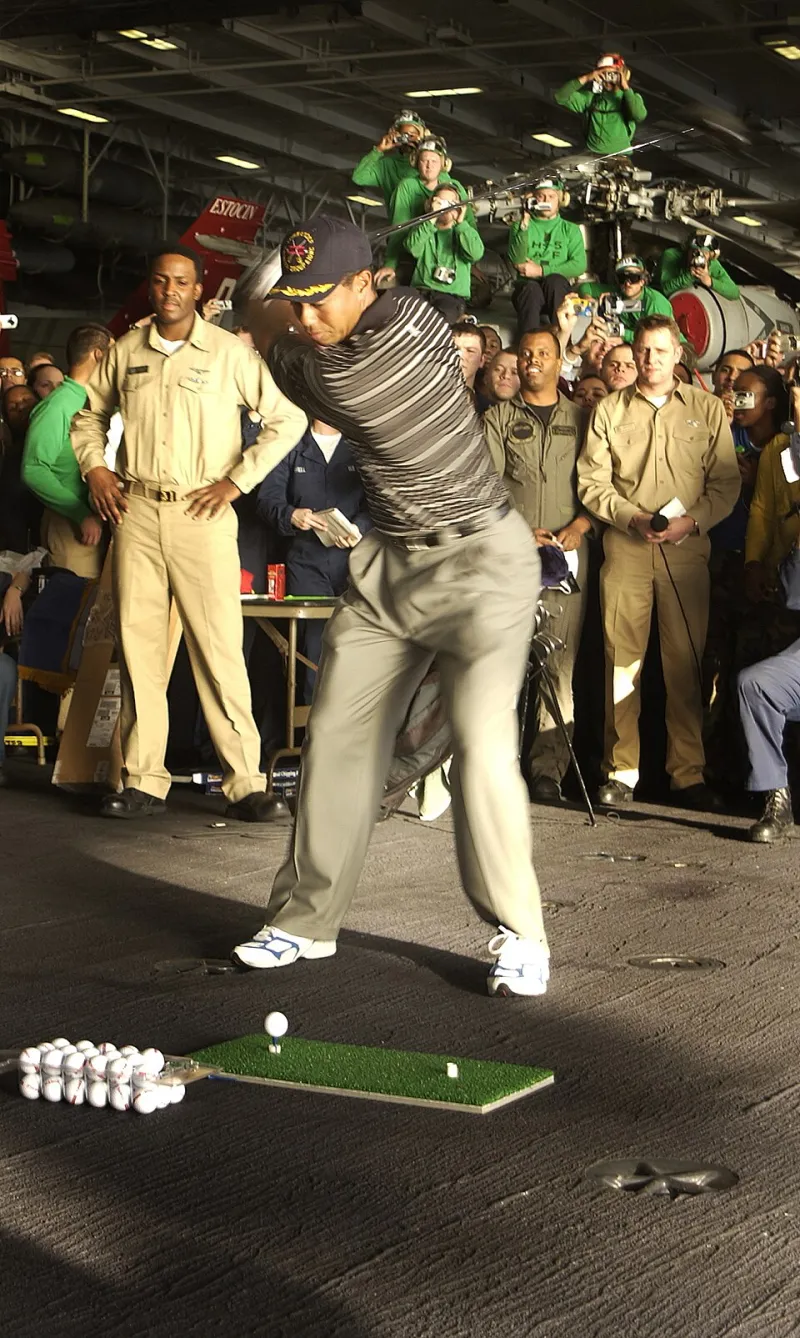
Photo: U.S. Navy photo by Photographer's Mate 1st Class Brien Aho., Public domain, via Wikimedia Commons
Your handicap tells you what you shot. It does not tell you why. Play long enough at one course and you can build a game that fits it perfectly — a swing that suits soft parkland fairways, a ball flight that works in still air, a short game that copes with thick rough because that is all you ever see. Then you go somewhere else and the number falls apart.
The seven iron is a good antidote to that. It is the club you hit from 150 yards, the club you use for a low punch, the club you reach for when the wind gets up. It is also deeply honest. Take the same seven iron to six different British course types and it will quietly report on your strike, your turf interaction, your trajectory and your wind control. Not your handicap. Your actual level.
This is a field test, not a championship. Six rounds, one club, four checkpoints. Score what you find. Then practise the thing that keeps showing up.
Why the seven iron is the honest witness
Drivers flatter you. Wedges rescue you. Putters let you forget the eleven shots before the green. The seven iron sits in the middle of the bag and asks a simple question: can you make a repeating, controlled motion from a normal lie, with a club that is neither lofted enough to forgive everything nor long enough to blame the shaft?
It also travels well. You can use it off the tee on a short par four, from the fairway, from a tight lie, into wind, and as a long chipping club around the green. One club, lots of evidence.
The ground rules
Use the same seven iron for all six rounds. Same ball, too, if you can. Play proper courses, not the range. Write your notes within ten minutes of walking off the last green, before the pint edits your memory. Do not chase a score. The scorecard here is for the club, not for you.
Score each checkpoint out of five after each round. Five means you repeatedly hit the shot you pictured. Three means mixed. One means you had no real control. Be mean. The point is a useful pattern, not a pat on the back.
Round one: parkland — the strike test
Parkland is the comfortable exam. Lush fairways, soft-ish ground, trees that make the wind feel manageable. Think Surrey, Berkshire, or a classic parkland track in the Midlands.
The seven iron exposes your strike here because the lie is friendly. If you are fatting it or thinning it from a good lie, that is not the course. That is the low point of your swing. Look for a divot that starts after the ball and a flight that holds its line without a little lurch.
Checkpoint: centred strike. Tell: you can hear it as much as feel it. Practice: put a towel two inches behind the ball and make seven irons without touching it.
Round two: links — the trajectory test
Now the course stops being polite. Firm turf, a breeze off the sea, and fairways that ask you to keep the ball down. Kent and Lancashire have plenty of this.
The seven iron is perfect for a low, boring shot that lands and runs. Can you take one club more, choke down, put the ball back, and make a three-quarter swing? Or does every shot turn into a full, high float that the wind eats?
Checkpoint: trajectory control. Tell: your playing partners are still waiting for the ball to come down while you are walking to it. Practice: hit seven irons under a head-high line at the range. Use a headcover as a gate if the range allows it.
Round three: heathland — the turf interaction test
Heathland is the connoisseur's test. Sandy soil, tight lies, wispy grass, and a bit of heather waiting to grab a heel. Surrey and Hampshire do this beautifully.
The seven iron has to skim, not dig. If the sole is too wide for you, or your angle of attack is too steep, the club will either bounce off the turf or take a small trench. Watch how the club enters the ground. Does it brush the grass or thump it?
Checkpoint: turf interaction. Tell: the ball goes up rather than forward, and your hands sting. Practice: alternate balls from tight lies and fluffy lies, trying to take a shallow divot the size of a pound coin.
Round four: downland — the slope test
Downland courses roll. You rarely get a flat lie, and the seven iron suddenly becomes a lesson in posture. Sussex and Wiltshire have plenty of this ground.
Uphill lie, downhill lie, ball above your feet, ball below your feet. The seven iron will show whether you adjust your shoulders to the slope or try to force a normal swing. It also reveals whether you can flight the ball down when the flag is at the bottom of a hill.
Checkpoint: trajectory and contact from uneven ground. Tell: you fall back on the downslope and the ball goes left on the sidehill. Practice: find a slope on the practice ground and hit ten balls with your shoulders matching the hill.
Round five: moorland — the strike test under pressure
Moorland is not tidy. Wet rough, heavy air, uneven ground, and lies that make you question your shoe choice. Yorkshire and the Peak District are good places to find it.
The seven iron here is about commitment. From a slightly scruffy lie, can you still make a controlled strike? Or do you quit on it and catch the ground behind the ball? This is where a home-course swing that only works from perfect lies gets found out.
Checkpoint: strike from imperfect ground. Tell: the ball comes out low and right, and your divot looks like a bid for a new drainage channel. Practice: hit seven irons from light rough, focusing on a shorter backswing and a full finish.
Round six: coastal — the wind control test
Coastal golf is the final exam. Exposed fairways, gusts that change between your practice swing and your backswing, and flags that are doing something different from what your eyes expect.
The seven iron teaches you to flight the ball down and shape it into the wind, or to use the wind rather than fight it. Can you keep the face square when the wind is off the left? Can you take enough club when it is into you and still make a smooth swing?
Checkpoint: wind control. Tell: you are aiming left and hoping, and your ball is doing whatever it likes. Practice: on a windy day, hit seven irons with a three-quarter swing and a low finish, alternating into and downwind.
The scorecard
After each round, mark the four checkpoints out of five.
| Course type | Strike | Turf | Trajectory | Wind | Note |
|---|---|---|---|---|---|
| Parkland | /5 | /5 | /5 | /5 | |
| Links | /5 | /5 | /5 | /5 | |
| Heathland | /5 | /5 | /5 | /5 | |
| Downland | /5 | /5 | /5 | /5 | |
| Moorland | /5 | /5 | /5 | /5 | |
| Coastal | /5 | /5 | /5 | /5 |
Add up each column. The lowest total is not a character flaw. It is a clue. If parkland strike is high but moorland strike is low, you have a lie problem, not a swing problem. If links and coastal wind scores are low but parkland is fine, you have never really learned to control flight.
Turning the pattern into a practice plan
Do not try to fix everything. Pick the weakest checkpoint and give it two weeks. If it is strike, use the towel drill and hit seven irons from a good lie until the sound is dull and repeatable. If it is turf, work on shallow divots and ball position. If it is trajectory, use head-high gates and three-quarter swings. If it is wind, practise low finishes and sensible club selection.
Weeks three and four go to the second weakest checkpoint. Weeks five and six combine them: low seven irons into wind from a tight lie, or centred strikes from a slope. Then repeat one of the six rounds as a retest. Same club, same checkpoints, same honesty.
The seven iron does not care what your handicap says. It just reports what happened. Six terrains, one club, and a scorecard that tells you what to work on next. That is a better use of a Saturday than another round at the same place, pretending the number is the whole story.