When the Ball Stops Flying: A Cold-Weather Carry Plan for Your Seven Iron
Photo: Staff Sgt. Steve Cushman, Public domain, via Wikimedia Commons
November has a way of humbling a seven iron. You make what feels like a decent swing, the ball leaves the face, and then it just stops. The flag is short, the front edge is short, and you are left staring at a club that worked perfectly well in August. Cold air is not an excuse. It is a variable, and it needs a plan.
The four quiet thieves of winter carry
The first is air density. Cold air is denser than warm air, so the ball has more resistance through the sky. The second is the ball itself. A ball that has been sitting in a cold bag for four hours does not spring off the face as readily as one that has been kept warm. The third is you. Cold muscles are stiffer, layers restrict the turn, and the body does not produce speed as easily. The fourth is the ground. Wet turf, winter mats and soft fairways change the strike and reduce the run-out. None of these is dramatic on its own. Together they can cost you half a club, a full club or more.
That does not mean your swing has fallen apart. It means your club selection needs recalibrating.
What it means on the course
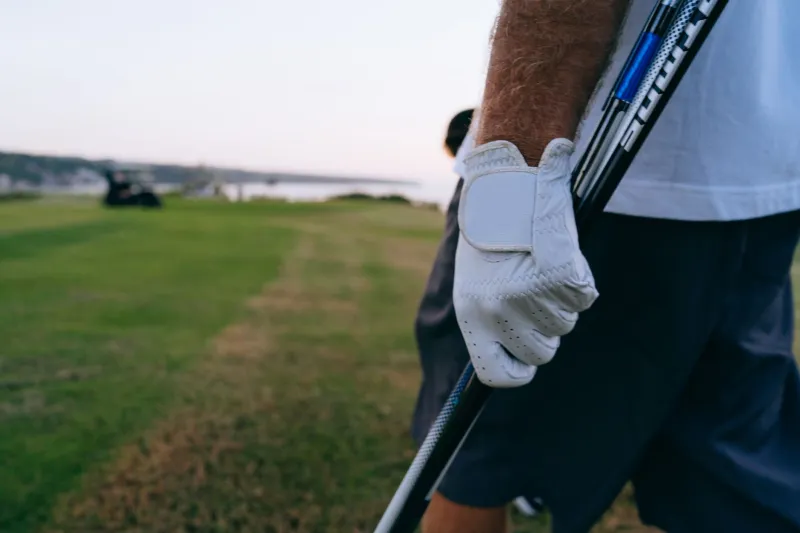
Treat your seven iron as a shorter club in November. If it normally carries 150 yards in summer, it may carry closer to 140 in a cold wind. If you are between a seven iron and a six iron, take the six. If the flag is front and the bunker is short, take the club that carries the front edge and accept that you may be putting from 25 feet rather than chipping from 15. The aim is not to hit the shot you hit in July. The aim is to hit the shot that gets you on the green today.
A simple rule for frosty medals: one club more, one smoother swing. Forcing a seven iron is the fastest way to come up short and left, or short and right, depending on your miss. A smooth six iron that finishes pin-high is a better golf shot than a hard seven iron that finishes in the front bunker.
The on-course adjustment method
Before you hit, check three things: temperature, wind and lie. Then pick the club that carries to the front of the green, not the flag. Make a rehearsal swing that feels like 80 per cent effort. Commit to the target. If the ball comes up short, resist the urge to hit the next one harder. Hit the next one with more club.
On frosty mornings, the greens can be temporary, the fairways can be mats and the ball can be cold. Do not try to be a hero. A par in a winter medal is often a gift. A bogey is not a disaster. The player who accepts the conditions usually beats the player who fights them.
A range test you can repeat in 2026
You do not need a launch monitor to do this, though one helps. Find a range with distance markers and a quiet bay. Take 30 balls and your seven iron. Warm up properly, then hit ten balls to a target at your normal summer carry. Ignore the best and worst. Note the average carry.
Now simulate winter. Put on an extra layer. Leave the balls outside the bay for five minutes. Hit ten more balls to the same target. Note the average carry again. The difference is your cold-air correction. If the drop is eight yards, that is roughly half a club for most club golfers. If it is 12 yards, it is closer to a full club. Repeat the test once a month through the winter and again in spring. Your correction will change with the weather and with your swing.
Club selection for frosty morning medals
- Take one more club than you think. A seven iron that normally carries 150 may need a six iron to carry 145 in cold air.
- Keep the ball warm. Put it in your pocket between holes. It is not cheating; it is common sense.
- Aim for the middle of the green. Winter greens are slower and less predictable, so a 20-foot putt is a good result.
- Use the putter from the fringe. Chipping off wet turf is a lottery; putting is not.
- Do not deloft the club to make up the distance. A hard, de-lofted seven iron will come up short and run into trouble.
- Warm up indoors if you can. A few minutes of movement before you tee off is worth more than an extra practice swing.
The mindset
Cold golf rewards patience. Your seven iron is not broken. The air is thicker, the ball is colder and your body is not the same machine it was in June. Adjust the club, smooth the swing and take the result. The player who understands the cold-air correction will be the one signing for a sensible score while everyone else is wondering why their seven iron has suddenly shrunk.