The Wear Marks Don't Lie: What Your Seven-Iron Grip Is Telling You This Winter
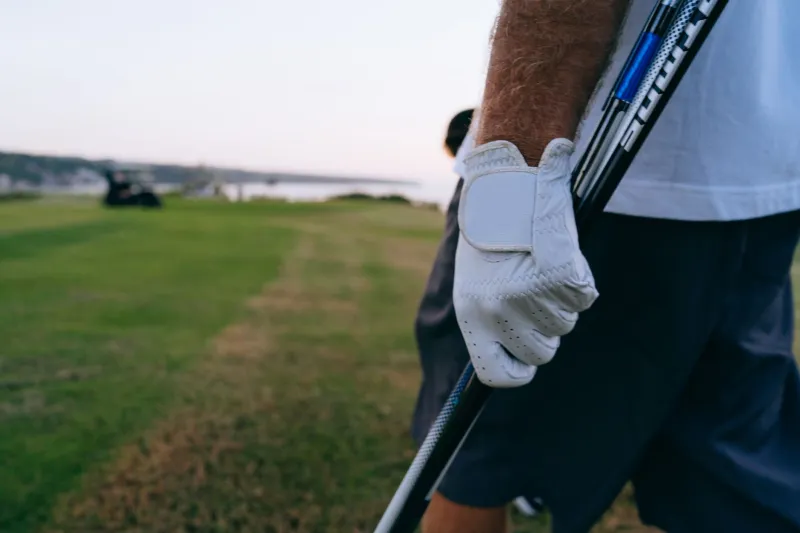
There is a moment every winter when you pull the clubs out of the garage, wipe the mud off the seven iron, and notice that the grip looks a bit shinier than it did in September. Most of us ignore it. We blame the cold, book a bay at the range, and spend forty minutes chasing numbers on a launch monitor.
That is fine, as far as it goes. But your grip has been keeping notes all season. Every squeeze, every regrip at the top, every wet-weather round with a glove that stopped being tacky in October — it leaves a trace. You do not need a swing lab to read it. You need ten minutes, a dry cloth, decent light and a willingness to be honest about what your hands have been doing.
Start with a clean, dry grip and a phone torch
Before you diagnose anything, clean the grip. A damp cloth and a gentle wipe is plenty. Let it dry fully. Then use the torch on your phone to look at both hands' worth of wear, not just the bit you can see at address. Photograph the top, the underside and the collar. Compare the wear on your seven iron with, say, your wedge or driver. If every grip is shiny in the same place, that is a pattern. If it is only the seven iron, that is probably volume of practice.
One important caveat: wear marks are clues, not a court verdict. Bag rub, trolley straps and a damp glove can all create shiny patches. Use the patterns below as prompts for a check, not as a reason to rebuild your swing before Christmas.
1. The lead-thumb crater
For a right-handed golfer, look at the left thumb area. A small, polished crater under the lead thumb usually points to pressure. Not necessarily a death grip, but enough tension that the thumb is boring into the rubber. It often pairs with a grip that is slightly too small, or with a player who squeezes harder when the pressure is on.
The likely symptom? A blocked fade or a thin strike when you really go after one. The thumb takes over, the wrists stop releasing, and the club arrives a little open. Try this: set the grip with the lead thumb sitting softly just right of centre, pressure about three out of ten. Make half swings feeling the club held in the fingers, not clamped by the thumb. If the grip still feels slippery, a slightly larger grip or a fresh one may help. If it feels secure and you are still cratering it, that is a technique job.
2. The trail-thumb polish
Now look at the top-right side of the grip, where the trail thumb and index finger sit. A polished patch here often means the trail hand is running the show. You may be regripping at the top, casting from the transition, or letting the right hand flip at the ball. It is common in players who hit a lot of range balls off mats and get away with a slightly heavy trail-hand action because the lie is perfect.
Check your trail thumb at address. It should be soft, not pressed into the grip like a cigarette into an ashtray. Make a few slow swings where the trail thumb almost floats. Feel the club sit in the last three fingers of the trail hand. If the wear is fresh and localised, spend a range session on tempo rather than speed. If the grip is old and slick, the trail hand may be working harder simply to hold on.
3. The heel-pad smear
A shiny smear on the heel pad of the lead hand, plus wear along the upper-left side of the grip, usually suggests the club is sitting too much in the palm. That is not automatically disastrous — plenty of good players have a strong palm-fingers blend — but too much palm can restrict wrist set and make the face harder to square. It often shows up as a low hook with the short irons or a weak slice with the longer clubs, depending on what the hands do to rescue it.
Set the grip so it runs from the base of the lead index finger diagonally across to the heel pad. You should see two or three knuckles on the lead hand for a neutralish grip. If you see none, or four, the wear mark is probably telling you the truth. A grip trainer or a quick check with your pro is cheaper than a winter of guessing.
4. The lower-collar ring
Look at the bottom third of the grip, near where it meets the shaft. A ring of wear there often means you are choking down more than you think. Some of that is fine — punch shots, awkward lies, bump-and-runs around the green. But if your seven iron has a polished band down low, you may be gripping shorter than standard without realising, especially under pressure. That changes the effective length and swingweight, and it can make your strike trend thin.
Put a dab of nail varnish or a thin tape mark at your normal grip position and check it at the range. If you keep drifting lower, ask why. Sometimes it is a comfort habit. Sometimes it is a sign the club feels too long or too heavy. Either way, the fix is awareness first, not a new shaft.
5. The patchy trail-finger scuff
Finally, look at the lower half of the grip where the trail-hand fingers sit. Patchy scuffing and localised shine here can point to a trail hand that is too active through impact — the classic flip. You may be releasing the club early to help it up, or squeezing with the fingers to save a shot. It is also common in players who wear out gloves on the palm rather than the heel.
Try the old favourite: hit a few seven irons with the trail hand pressure at two out of ten, feeling as if the lead hand controls the face. Then swap to a split-hand drill, with the trail hand down the grip, and hit little half shots. If the scuffing pattern starts to fade after a few weeks, it was hand action. If it returns immediately, your grip may simply be worn out and letting the club move.
Re-grip or rebuild?
Here is the practical bit. If the whole grip is glazed, cracked, or slick when your hands are slightly damp, re-grip. UK winters are hard on rubber. A grip that was fine in July can feel like a wet eel in November, and no amount of technique work will fix a surface that has stopped being tacky. As a rough guide, if you play twice a week and practice, a year is a long time for a grip. If it is shiny all over, it has done its shift.
If the grip is fresh but the wear pattern is already localised, treat it as a technique clue. Check grip size, pressure and hand position before you spend money. A club golfer with a correctly sized grip and a three-out-of-ten squeeze will usually see fewer weird marks within a month.
Your winter audit
Do this once now and once in February. Clean the grips, photograph them, and note where the shine appears. Then take one seven iron to the range with a single thought — soft hands, club in the fingers — and hit twenty half swings. Do not chase distance. Chase the feeling of the grip staying quiet in your hands.
Your launch monitor can tell you spin rate and carry. Your grip tells you why. This winter, give the humble wear mark five minutes before you give the screen another hour.