Low and Behold: Flighting Your Seven Iron Through a British Blow

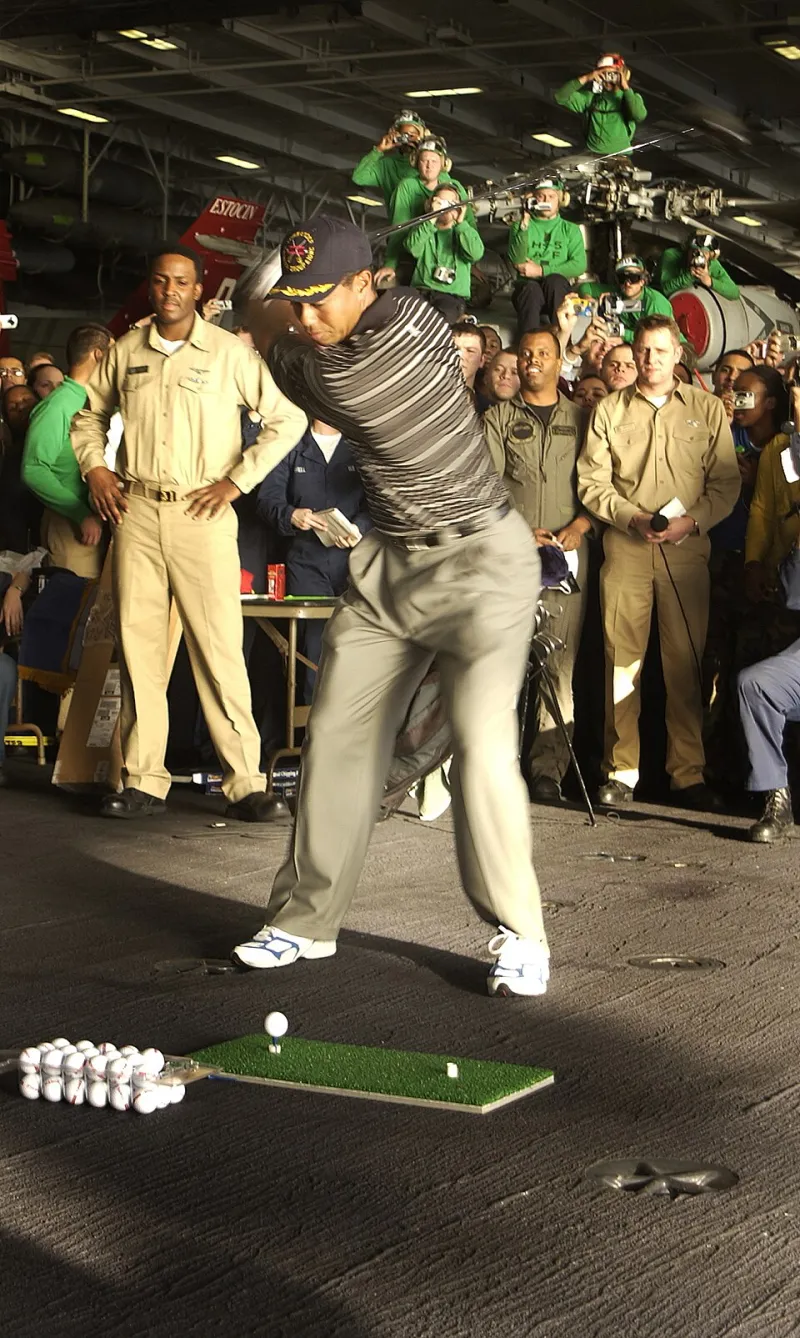
Photo: golfer hitting low iron shot into wind on UK links golf course, via kahoot.com
There is a particular kind of British golf day that does not appear in the brochures. The sky is the colour of an old dishcloth, the flag is cracking like a whip, and your playing partners are already debating whether a five iron is enough from 140 yards. This is not golf for the faint-hearted. It is also, strange as it sounds, exactly the sort of day when your seven iron can become the most useful club in the bag.
The temptation in wind is always the same: swing harder, hit it higher, hope for the best. That approach rarely ends well. A full-blooded seven iron into a stiff northeasterly can balloon, stall and drop short of the green with a horrible lack of fuss. The better play is usually duller, lower and far more repeatable. Think of the seven iron not as a distance club on days like this, but as a control club.
Why the seven iron suits a grey, gusty day
Most club golfers have a comfortable relationship with the seven iron. It is long enough to shift the ball, short enough to feel manageable, and familiar enough that you can make a sensible swing without overthinking. That familiarity matters when the weather is doing its worst.
Wind magnifies every bit of spin and curve you put on the ball. A shot that drifts gently right in still air can turn into a full-blown slice when the gust is coming across you. A high, spinny strike into the teeth of the breeze will climb, stall and get knocked down. The seven iron gives you a chance to reduce all of that. You can grip down, move the ball back a touch, make a shorter swing and keep the flight under the worst of the weather.
Cold and wet add their own complications. The ball does not fly as far, the fairways do not run, and your hands feel like you are holding a frozen sausage. In those conditions, a low, punched seven iron is often more trustworthy than a lofted club swung at full speed. It gets the ball running sooner, keeps it out of the wind and asks less of your contact.
The setup: small changes, not a new swing
You do not need to reinvent your game to flight the ball down. Start with the ball position. Move it back by roughly a ball width from where you normally play it, so it sits just behind centre in your stance. That helps you strike it with a slightly descending blow and keeps the launch down.
Next, narrow your stance a little. A narrower base makes it easier to turn through the ball without sliding or hanging back. Put a touch more weight on your lead side at address, maybe 55 per cent, and keep your hands slightly ahead of the ball. Grip down an inch or so on the handle. That shortens the club effectively and gives you a bit more control.
The clubface should stay square. This is not the moment to get creative with a manufactured draw or fade. Wind will exaggerate whatever you do, so keep the face predictable and aim at a sensible target. On a wet day, make sure the grip and clubface are dry before you swing. It sounds obvious, but a towel is as important as any swing thought when the rain is coming sideways.
The swing thought: finish low, keep it moving
The key feel for a windy-day seven iron is a three-quarter swing, not a three-quarter-hearted one. You still need to accelerate through the ball. The backswing gets shorter, the follow-through gets lower, but the club must keep moving.
A useful thought is to finish with your hands around waist height rather than up by your shoulder. Imagine you are trying to keep the ball under a low ceiling. Another feel that works for a lot of weekend players is to picture a punch shot rather than a full iron shot. The strike should feel crisp and controlled, not stabby.
Do not decelerate. The most common mistake with a knockdown shot is to make a short backswing and then quit on it. That produces a weak, spinny float that the wind eats alive. Keep the chest turning through the shot and let the club finish low and left. If you can hear a nice, compressed strike rather than a thin click, you are on the right track.
Club selection: the compromise that saves you
Here is where a bit of honesty helps. The seven iron is a brilliant bad-weather weapon, but it is not always the right club. Into a strong wind, you may need a six iron or even a five iron, swung at 70 per cent, to produce the same distance as a full seven iron on a calm day. That is not a failure. That is golf.
The compromise is this: take more club than you think, make a shorter swing and keep the flight down. A punched six iron that finishes pin-high is worth far more than a heroic seven iron that comes up ten yards short. Downwind, the opposite applies. You can often take less club and let the breeze do the work, but be careful not to get greedy with a high shot that keeps climbing.
In cold, wet conditions, add a club for the loss of carry. In crosswinds, aim the shot and allow for the drift rather than trying to curve it back. The seven iron is your calibration club here. Once you know how far a low seven iron travels into a given wind, you can build the rest of your bag around that number.
Three UK scenarios where the punch wins
First, the exposed links par three. You are standing on a tee with nothing between you and the sea except a low wall and a flag that is leaning hard to the right. The green is 150 yards away, but it might as well be 180 into that breeze. A low, gripped-down seven iron that lands short and runs on is often the smartest play. The hero shot might look wonderful in your head. It rarely looks wonderful on the card.
Second, the tree-lined parkland dogleg. The wind is swirling through the branches and you need to keep the ball under the canopy and in play. A punched seven iron with a slightly narrower stance can thread the gap and leave you a simple wedge into the green. Trying to launch a high shot over the trees is how double bogeys are born.
Third, the soggy winter fairway. There is no run, the ball is sitting down, and the green is a long way off. A low seven iron that carries the wet patch and finishes safely short of the bunker is a perfectly respectable play. It keeps you moving forward and avoids the sort of expensive mistake that makes you want to go home and browse golf clubs online instead.
A range session that pays for itself
You do not need a launch monitor to learn this shot, though one can help. Find a day when the range is into the wind, or at least breezy, and hit ten normal seven irons. Then hit ten knockdown seven irons with the ball back, the grip down and the finish low. Compare the flights. Notice which one holds its line and which one gets knocked about.
A simple drill is to alternate high and low shots with the same club. Hit one full seven iron, then one punched seven iron, then another full one. The goal is not to master the low shot in ten minutes. It is to build a feel you can trust when you are standing on a wet tee with the wind in your face and no time to experiment.
When the high shot still makes sense
None of this means you should never hit a high seven iron again. Downwind, with a firm lie and a green that will hold, a normal flight is often the better play. If you need to carry a bunker or a pond, the low shot may not be the answer. The trick is to choose the shot deliberately rather than defaulting to the same swing every time.
On a grim November morning, though, the low seven iron is a wonderfully reassuring club. It asks you to make a smaller, calmer swing, it keeps the ball out of the worst of the wind and it gives you a fighting chance of finding the green. In British golf, that is usually worth more than a moment of heroism.